
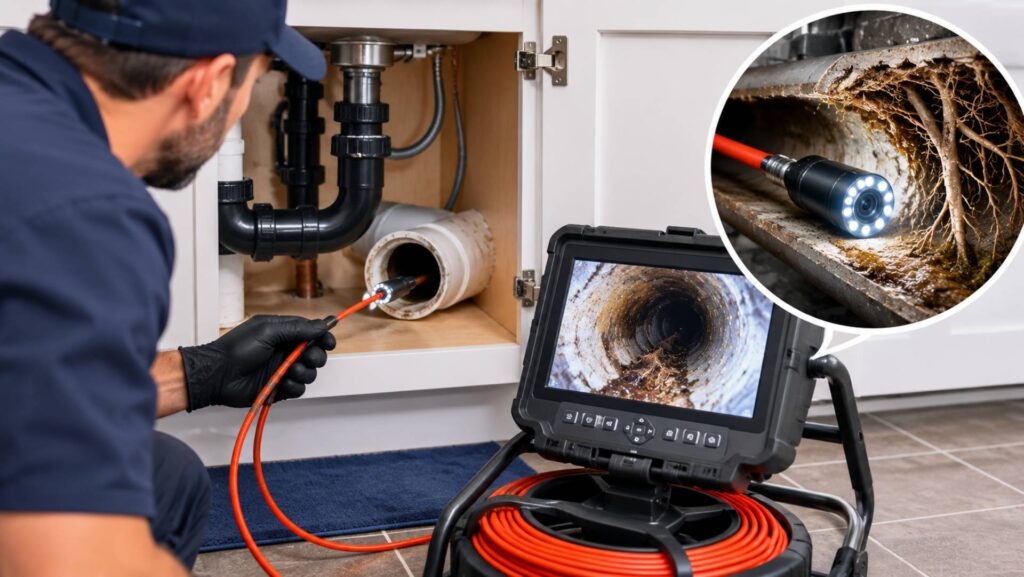

Recurring clogs, slow drains, and unpleasant odors often point to a problem hidden deep inside the plumbing system. A sewer camera allows plumbers to see what is happening without unnecessary digging. Understanding what the inspection can reveal helps homeowners choose the right repair and avoid repeated, ineffective drain treatments later.
Introduction
A stubborn drain problem is rarely solved by guesswork. When clogs return, several fixtures drain slowly, or foul odors keep appearing, the real cause may be farther inside the sewer line. Professional sewer camera inspections for drain issues provide a clear view of the pipe’s interior, helping a plumber locate blockages, damage, and buildup with greater accuracy. The inspection does not repair the pipe by itself, but it shows what type of work may be needed. That insight can prevent unnecessary digging, reduce delays, and help homeowners make informed decisions about drain cleaning, sewer repair, or line replacement at home.
How a Sewer Camera Inspection Works
A sewer camera inspection allows a plumber to examine underground pipes without opening floors, walls, or landscaping. The process uses specialized equipment designed to travel safely through drain and sewer lines. Live footage helps the plumber understand the location, type, and seriousness of the problem.
The Camera Travels Through the Drain Line
A sewer camera is a waterproof device attached to a flexible cable. A plumber guides it through an accessible drain or cleanout while watching live footage on a monitor. Built-in lighting makes hidden sections visible and helps locate the area causing trouble. Because the camera follows the existing pipe, the inspection can often reduce the need for exploratory digging.
The Footage Shows the Pipe’s Condition
The inspection may reveal grease, soap residue, debris, tree roots, corrosion, cracks, separated joints, or a collapsed section. This distinction matters because a removable blockage needs a different solution from structural pipe damage.
Problems a Sewer Camera Can Identify
Drain problems can result from temporary obstructions or damage to the pipe itself. Without inspecting the line, these different causes can produce very similar warning signs. Camera footage provides the visual information needed to separate a simple clog from a more serious sewer problem.
Recurring Buildup and Blockages
When a drain slows again soon after clearing, material may still be coating the pipe walls. Camera footage shows where buildup has collected and whether professional drain cleaning, mechanical clearing, or hydro jetting may be appropriate.
Root Intrusion and Pipe Damage
Tree roots can enter through small cracks or loose joints and continue growing inside the sewer line. A camera can show the entry point and reveal nearby damage. It may also expose corrosion, cracks, and shifted connections that catch debris and cause repeated clogs.
A Cleaning Problem or a Repair Problem
Professional sewer camera inspections for drain issues help separate temporary obstructions from damaged pipes. This allows a plumber to recommend targeted cleaning, repair, or replacement instead of repeating a treatment that does not address the true cause.
When an Inspection Makes Sense
Not every slow drain requires a sewer camera inspection, especially when the problem affects only one fixture and clears easily. However, recurring clogs, multiple slow drains, unpleasant odors, or wastewater backups may indicate a deeper issue within the sewer line. An inspection can locate the hidden cause and help determine whether professional cleaning, pipe repair, or replacement is needed.
Several Drains Are Slow
One slow fixture may have a local clog. When sinks, tubs, showers, or toilets are affected together, the main drain or sewer line may be involved. A camera can locate the shared restriction and show how serious it is.
Clogs Keep Returning
A returning clog may mean that only part of the blockage was removed. It can also signal roots, heavy buildup, or damaged pipe walls. Inspecting the line before repeating the same treatment can prevent unnecessary work.
Odors, Gurgling, or Backups Appear
Persistent sewer odors, bubbling sounds, and wastewater backups can point to a serious restriction. These warning signs deserve professional attention, especially when they affect more than one fixture.
What Happens After the Inspection?
The plumber reviews the footage, identifies the problem area, and explains the available options. Depending on the findings, the next step may include drain snaking, hydro jetting, sewer line repair, or replacement of a damaged section.
A camera may also be used after cleaning or repair work to check that the obstruction has been removed and the affected area has been addressed. This provides greater clarity and helps homeowners understand the condition of the sewer line.
FAQs
Can a Sewer Camera Find Every Drain Problem?
It can reveal many visible conditions, although standing water, heavy debris, or a collapsed line may limit the view.
Does the Camera Remove the Clog?
No. It is a diagnostic tool. A separate drain cleaning or repair service is needed to remove the blockage or fix the damaged pipe.
Can the Inspection Harm the Pipe?
When handled by a trained plumber, the camera is designed to move through the line safely.
Is It Useful Before Sewer Line Replacement?
Yes. The footage can help determine whether a limited repair or larger replacement is appropriate.
The Bottom Line
Sewer camera technology gives plumbers a direct view of problems that would otherwise remain hidden beneath floors, walls, or landscaping. It can reveal stubborn blockages, root intrusion, corrosion, cracks, separated joints, and other conditions that interfere with drainage. More importantly, it helps match the repair method to the actual cause instead of relying on repeated temporary fixes. Homeowners should consider an inspection when several drains slow down, clogs return after cleaning, odors persist, or wastewater begins backing up. The camera does not clear or repair the line, but the information it provides can support faster and more targeted decisions. By using sewer camera inspections for drain issues, homeowners can better understand the condition of their pipes, avoid unnecessary work, choose a practical solution, and protect reliable drainage throughout the home for years to come.
